Tech Sucks… But It Doesn't Have To
Table of Contents

This page at rwsingh.likespizza.com
Contact me at RSINGH13 at JCCC dot EDU
Artisanally hand-crafted with
HTML, CSS, GnuIMP, & emacs orgmode by R.W. Singh
1. Introduction
1.1. Who am I?

- R.W. "Moose 🫎" Singh (they/them)
- Associate Professor of Computer Science at JCCC
- Previously worked in web and software development
- I make indie video games in my free time
- Sometimes Flash animations using my 1999 copy of Macromedia Flash
- Grew up on the "old, good internet"
- I've been an Open Source enthusiast for a long time, and have spent a lot of time reading, researching, and thinking about ethics in tech


1.2. Banned Books Week: Oct 4th - 10th, 2026

From the Banned Books Week website:
Banned Books Week was launched in 1982 in response to a sudden surge in the number of challenges to books in libraries, bookstores, and schools. Held in the last week of September or first week of October, the annual event highlights the value of free and open access to information and brings together the entire book community — librarians, educators, authors, publishers, booksellers, and readers of all types — in shared support of the freedom to seek and to express ideas.
[…]
By focusing on efforts across the country to remove or restrict access to books, Banned Books Week draws national attention to the harms of censorship. The ALA Office for Intellectual Freedom (OIF) compiles lists of challenged books as reported in the media and submitted by librarians and teachers across the country.
[…]
The most common justifications for censorship provided by complainants were false claims of illegal obscenity for minors; inclusion of LGBTQIA+ characters or themes; and covering topics of race, racism, equity, and social justice.
1.3. Library Bill of Rights
The American Library Association affirms that all libraries are forums for information and ideas, and that the following basic policies should guide their services.
I. Books and other library resources should be provided for the interest, information, and enlightenment of all people of the community the library serves. Materials should not be excluded because of the origin, background, or views of those contributing to their creation.
II. Libraries should provide materials and information presenting all points of view on current and historical issues. Materials should not be proscribed or removed because of partisan or doctrinal disapproval.
III. Libraries should challenge censorship in the fulfillment of their responsibility to provide information and enlightenment.
IV. Libraries should cooperate with all persons and groups concerned with resisting abridgment of free expression and free access to ideas.
V. A person’s right to use a library should not be denied or abridged because of origin, age, background, or views.
VI. Libraries which make exhibit spaces and meeting rooms available to the public they serve should make such facilities available on an equitable basis, regardless of the beliefs or affiliations of individuals or groups requesting their use.
VII. All people, regardless of origin, age, background, or views, possess a right to privacy and confidentiality in their library use. Libraries should advocate for, educate about, and protect people’s privacy, safeguarding all library use data, including personally identifiable information.
2. Then vs. Now…
2.1. Video games
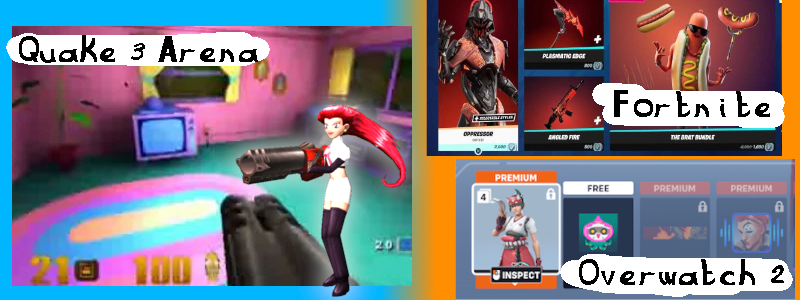
- Back then…
- In games like Quake 3 Arena and Unreal Tournament you were able to download maps and skins for free to add into the game.
- For a while, gambling-style loot boxes were popular in more modern games, but as there was threats of it being legislated, the games industry found other methods of income.
- These days…
- Even things like game Item Shops and Battle Passes utilize player psychology, such as "fear of missing out", limited-time deals, and more to influence gamers of all ages to shell out money for skins, items, and other customizations.
2.2. Website customization
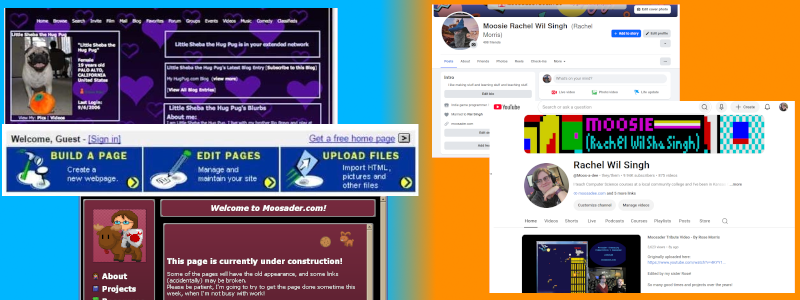
- Back then…
- Social websites like Neopets, MySpace, and blog hosts permitted users to customize their pages with CSS, which motivated a lot of young users to begin learning about web development.
- We were more used to visiting individual webpages rather than having everything be aggregated on just Facebook, Twitter(whatever), and Instagram.
Webpages would have web rings and links to other pages with little banners

- These days…
- Social media only lets you set a profile picture and maybe a banner, but everything else on the site remains uniform, so you have to figure out how to make yourself fit inside of a box.
- This can be better for accessibility. However ALL tools should enable easy creation of accessible works, rather than just assuming we all have to live in the same little boxes on the same social media pages.
- Social media only lets you set a profile picture and maybe a banner, but everything else on the site remains uniform, so you have to figure out how to make yourself fit inside of a box.
2.3. Ownership of media

- Back then…
- Bandwidth was not so widely available, so we still bought games, music, and movies on physical media.
Knowledge circulated among us on how to rip the music and movies off disks, so we could have personal copies on our computers that we could listen to with mp3 players.

- Once you purchased an item you owned it - your physical media couldn't be taken away.
- Bandwidth was not so widely available, so we still bought games, music, and movies on physical media.
- These days…
- Video game cases often come with just a "download code" - or even if a game is included, it has to be heavily patched before playing.
- Even if we pay to "buy" a movie off a service, we still have to use locked down players with DRM to play them, and there is stil a chance that the service will just remove the media in the future.
- It can be hard to find digital MP3 albums to buy online, especially if you're trying to avoid Amazon.
- Many games (even single-player) still require some form of internet connection in order to play them, or to verify with a server - if the company's server is shut down, you can't play anymore.
- Games in digital storefronts (Wii Shop Channel, XBox Live Arcade, Google Play, Apple App Store) may be de-listed, taken down, or completely removed - even if you paid for the game, it just disappears. (This can be an issue with video media, too!)
3. What's wrong with our tech today?

-
“First, platforms are good to their users. Then they abuse their users to make things better for their business customers. Next, they abuse those business customers to claw back all the value for themselves. Finally, they have become a giant pile of shit.”
Cory Doctorow, Enshittification
- Psychological exploitation:
- We'll give you a random ugly default skin that doesn't represent you so you feel motivated to BUY a custom skin.
- Don't let your Snapchat streak end! Keep using our app!!
- Link to page 2? NAH, infinite scrolling!!
- Oh you deleted a selfie? Perhaps we'll just up some ads for beauty products…
- Here's a trending INFLAMATORY POST, don't you want to ENGAGE???
- Dark patterns: Designs created to trick the user, for example:
- Hidden "x" icons on ads
- Misleading button styling (a button colorized to look like the "continue" or "cancel" button but not the action you're expecting)
- Verbiage to "shame" the user ("Yes, sign me up for the mailing list!" vs. "NO THANKS, I DON'T LIKE GETTING FREE STUFF")
- Making it harder to cancel than it is to sign up ("Want to cancel the meal kit? You have to call or email our representatives!")
- Surveillance:
- Yeah, we're an email provider, but what if we also read all your emails and tracked you around the internet to build a detailed profile on you for us to make tons of money selling ads targeted toward you?
- You have a phone? We're just going to track your physical location all of the time.
- Met up with a friend? Let's compare both of your algorithms and figure out how to "cross-polinate" to show you new ads!
- You're a teenager and using Facebook chat with your mom to plan an abortion? Let's hand that over to the authorities…
3.1. Maybe the alternative isn't as polished - but it's still usable
There are a lot of Free/Open Source alternatives to existing products out there, they may just not be as polished as you're used to. (Still, compared to tech from 15+ years ago, quite polished!)
 Proprietary software wants to keep you in their ecosystem for as long as possible so they can "learn"
about you, train their ad systems, and serve you ads to maximize their profits.
Proprietary software wants to keep you in their ecosystem for as long as possible so they can "learn"
about you, train their ad systems, and serve you ads to maximize their profits.
They're not going to faciliate cross-platform interactions, they're not going to prioritize you above the revenue, they are not community-oriented but instead quite anti-social.
 While Free/Open Source ecosystems have their own problems, there is a lot more freedom in the tools.
Distributed social media alternatives permit you to pack up your profile and move to a new server, let you interact with people on different platforms,
3.2. Cool example of Fediverse interoperability
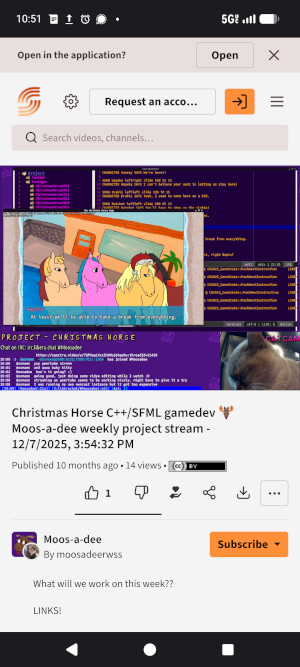
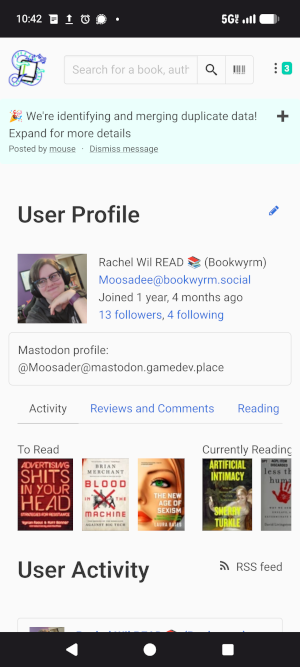
(Quick links for during presentation: Bookwyrm profile Mastodon view / Pixelfed profile Mastodon view)
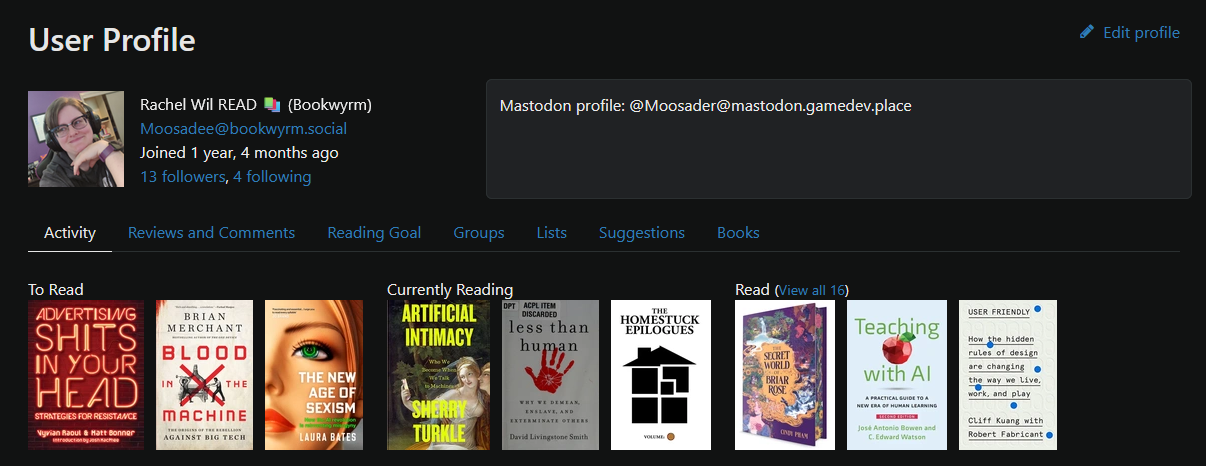
A screenshot of my profile on Bookwyrm, a reading logging social media site.
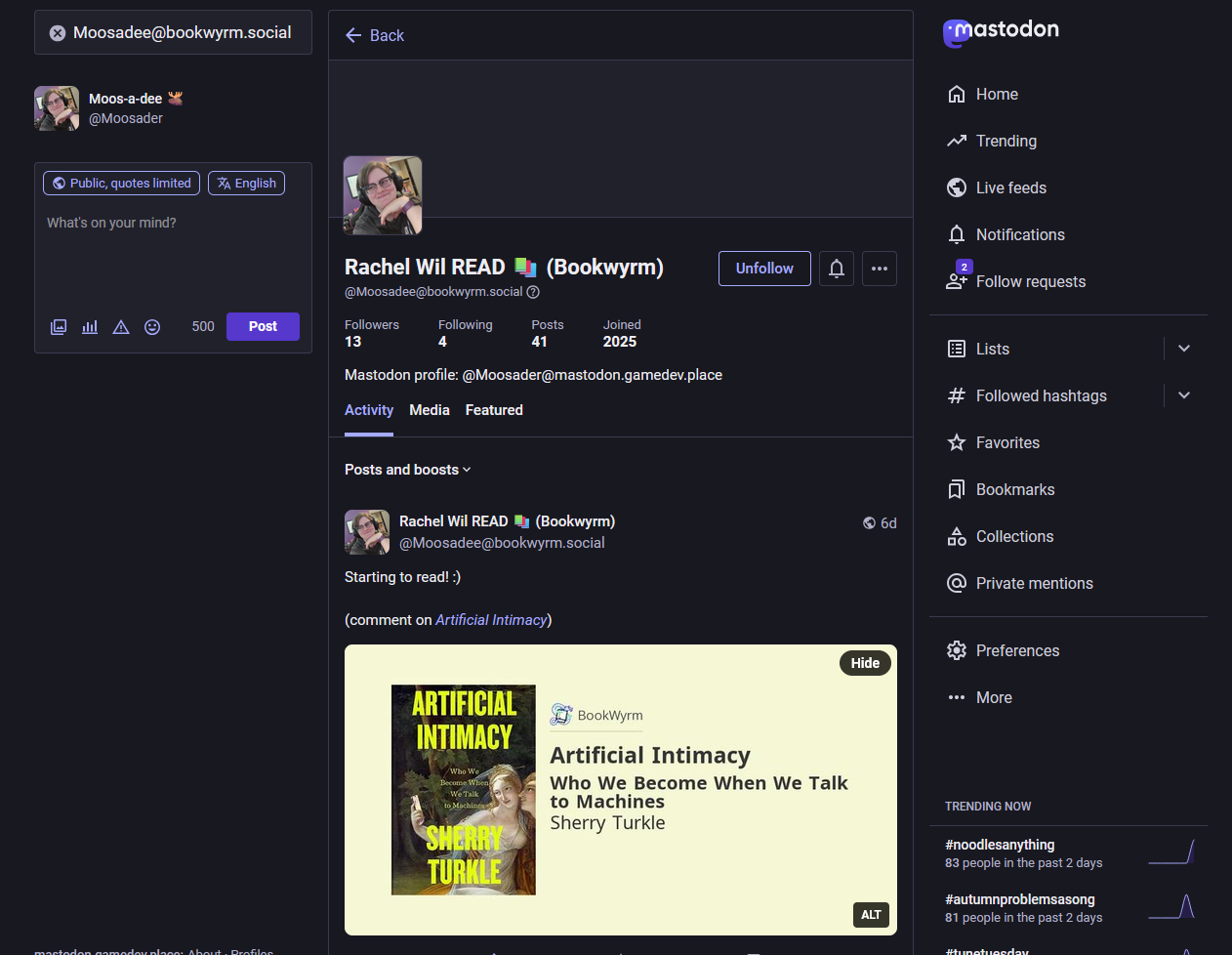
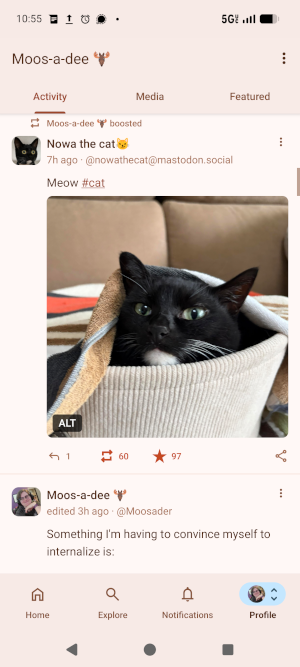
Viewing my Bookwyrm account feed from Mastodon (a Twitter-like social media site).
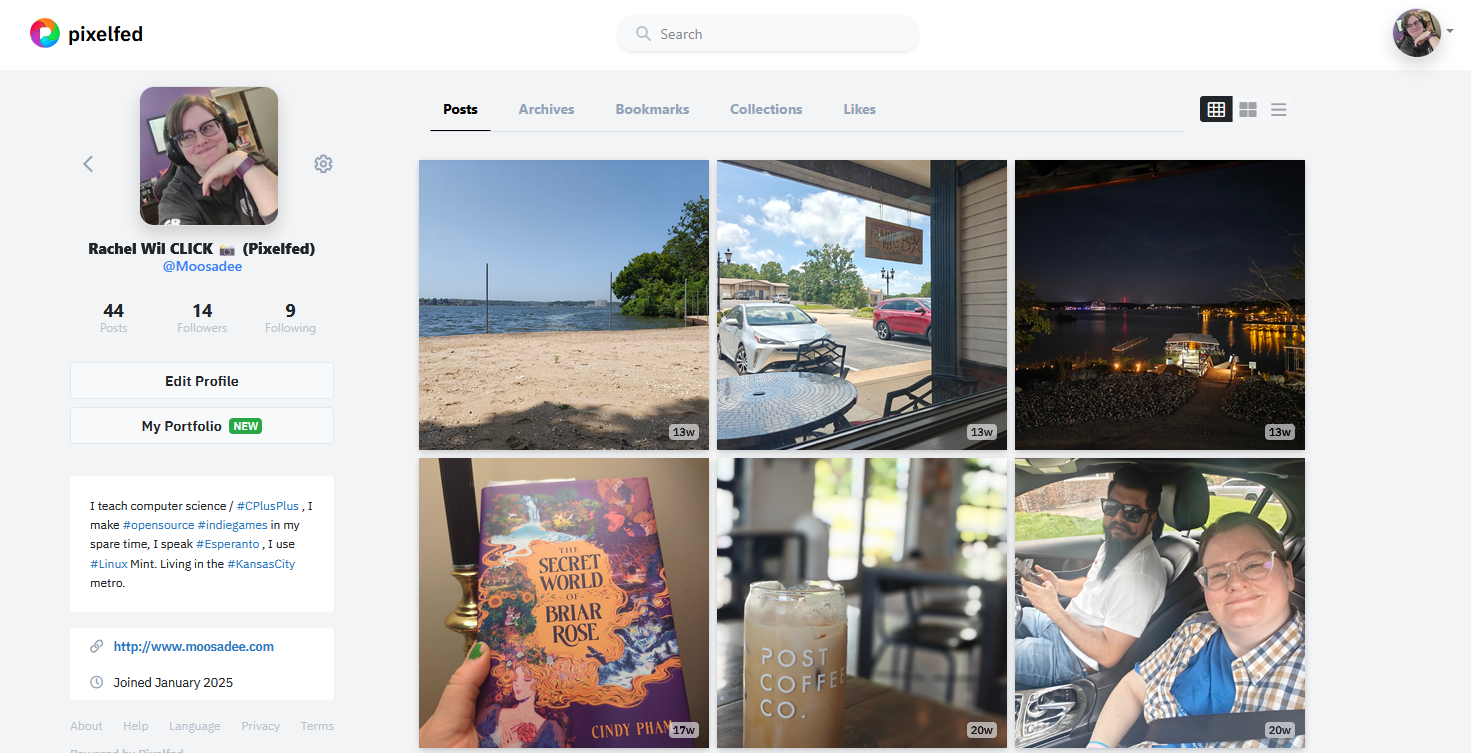
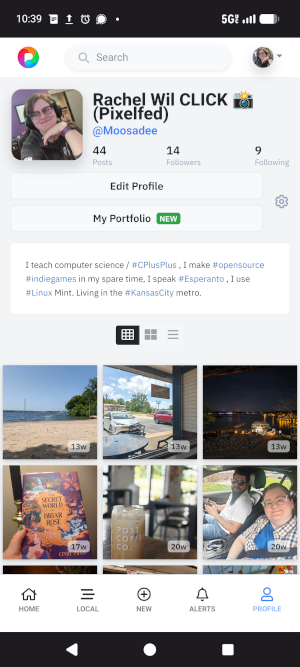
A screenshot of my profile on Pixelfed (Instagram alternative).
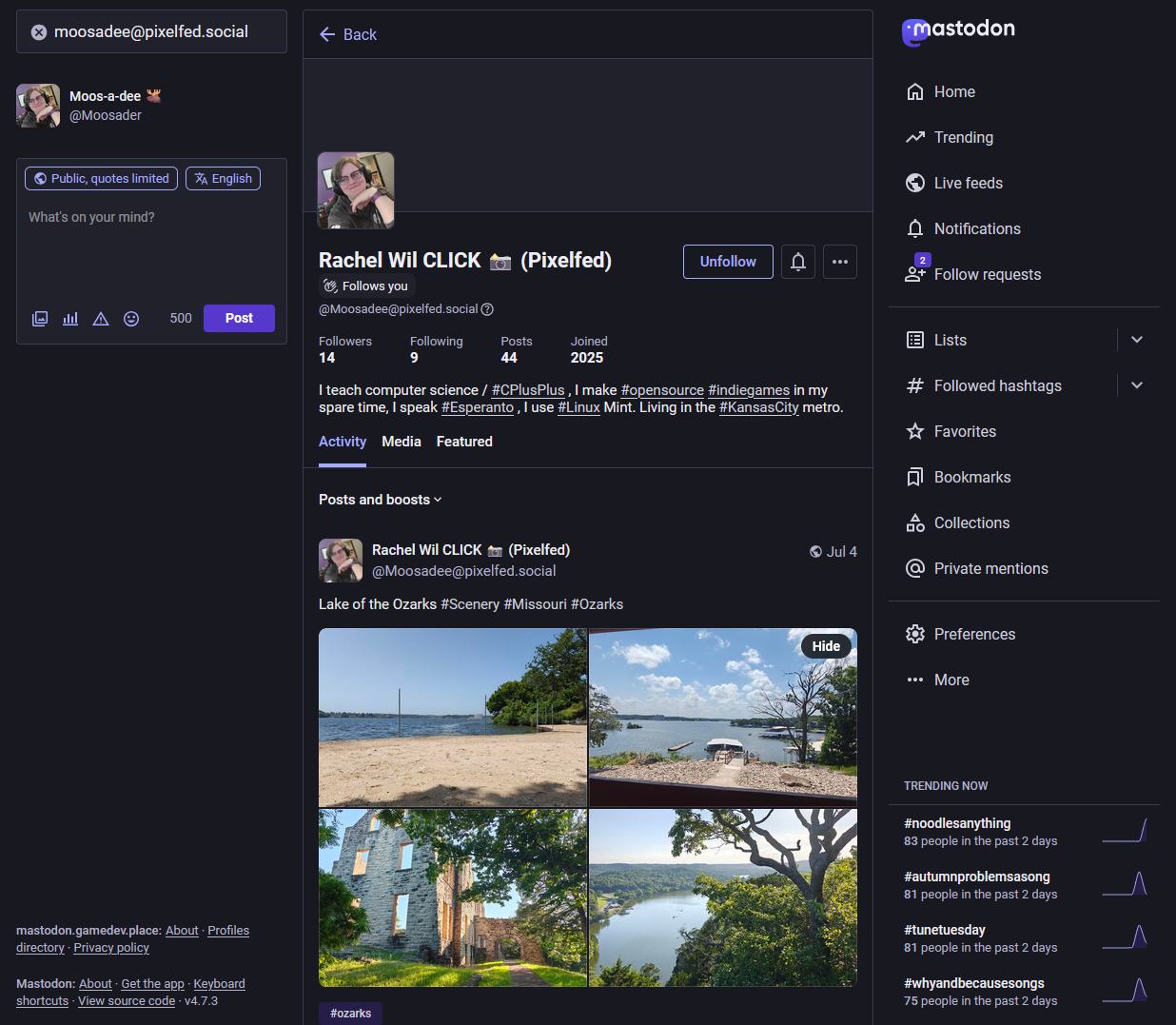
Viewing my Pixelfed account feed from Mastodon.
4. How to get away?
4.1. Stop watching ads
YouTube created a product and programmed in artificial ways to inconvenience us – you can't have the app or website (in mobile view) play videos in the background or with your screen off unless you give them money.
DON'T REWARD BAD BEHAVIOR!!
Watch YouTube in Firefox, even on your phone. You can have an AdBlock installed like uBlock Origin - even on mobile! If you want to watch a video in the background on your phone, change the browser to "Desktop" mode.
- On Desktop there are also Firefox plugins like SponsorBlock (auto-skip sponsor segments), DeArrow (change thumbnails and titles to be less click-baity).
4.1.1. Installing AdBlock on Firefox (computer)
-

Click the puzzle piece button at the top-right of the screen. -

Click the "Manage extensions" option. -

In the search bar, search for "adblock". -
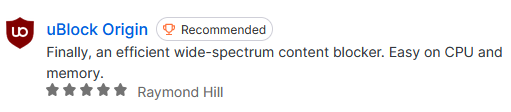
Find "uBlock Origin" and click it. -

Click "Add to Firefox". -
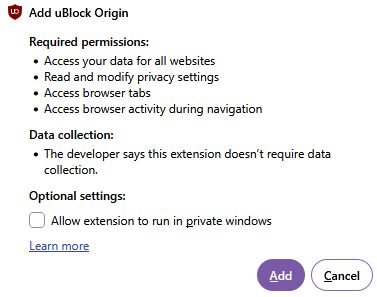
In the permissions popup, click "Add".
4.1.2. Installing AdBlock on Firefox (mobile)
-

In the address bar, tap on the three-dot menu. -
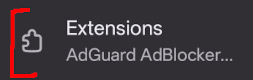
Tap the "Extensions" option. -

Select "Manage extensions" -
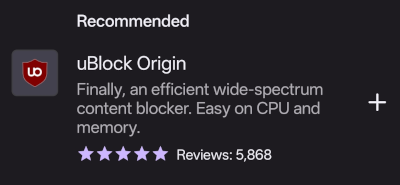
uBlock Origin is probably already in the "Recommended" section. Click the plus button. -
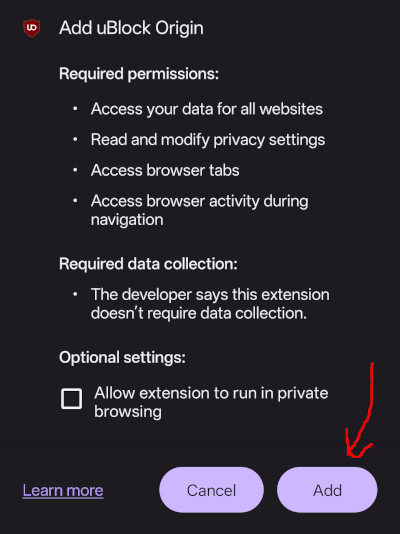
In the permissions window, select "Add".
4.2. Messengers
4.2.1. Text message style


WhatsApp, Snapchat, etc.
These proprietary apps have ads, utilize psychology (like "chat streaks") to keep you hooked, bake-in AI (because of course they do).


Signal is the main encrypted chat app that people use for privacy.
Note: Even when text chat logs are encrypted, metadata can still be logged, such as when messages are sent, how frequently two contacts communicate, cell networks, etc.
4.2.2. Chatroom style


Discord, Slack, MS Teams
Discord contains a bunch of ways it tries to get you to pay up - buying skins for your profile,
a monthy subscription service to unlock additional features, and more.
Slack offers limited free functionality, and MS Teams is part of Microsoft.
(BACK IN MY DAY you could download and install skins for chat apps like Trillian for free!)


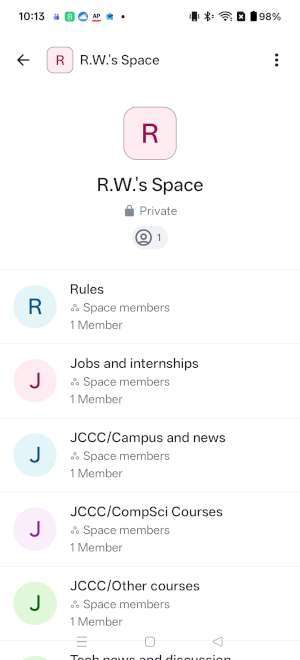
Matrix is a decentralized chat standard that other chat apps can be built on, and there's a basic Matrix client as well. Element is a larger offering built on top of Matrix meant to be a bit more like Slack/Teams and has a free version as well as an enterprise plan.
4.3. Social media
4.3.1. Photo sharing

Instagram, owned by Meta (Facebook), driven by algorithms that show you what they want you to see, not just what/whom you are following.

4.3.2. Short-form blogging/posting


X, Bluesky, Threads
X is owned by Elon Musk (ew), Threads is Meta, and Bluesky is slightly more distributed but still proprietary.

4.3.3. Vertical video

TikTok
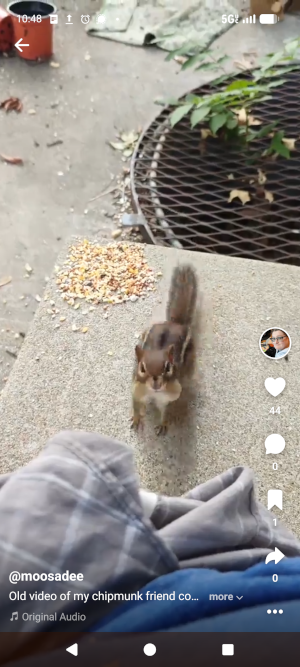
Heavily algorithm-based, ads and marketing heavy, U.S. version now owned by Oracle.

4.3.4. Long video

YouTube
At the mercy of Google. People self-censor so they don't lose out on ad revenue or get their video deprioritized in the algorithm.

4.3.5. Book logging


4.4. Search engine

Once there's no more growth to pursue, what do you do? You enshittify your search! Hope you weren't relying on people coming to your website, because now we tell them the answers through our search page AI (if it's even accurate, who knows...), stealing any page views you could get!

DuckDuckGo and NOAI DuckDuckGo
Simple and clean web search, image search lets you view and download files directly (Google doesn't let you anymore, gotta go thru the webpage),
has a News, Map, Shopping search as well. I use the "bang" commands to quickly do searches (like "cute cats !i" to search images immediately, or
"404 media !yt" to search on YouTube).
4.5. Productivity tools and notes apps
4.5.1. Document editing


Microsoft Office, Google Docs
Microsoft and Google are going to bake-in their AI tools and there's nothing you can do about it.

LibreOffice contains a Word alternative (Writer), Excel alternative (Calc), PowerPoint alternative (Impress), an Access alternative (Base), a diagramming tool (Draw), and supports a math equation editor.

4.5.2. Note taking / Knowledge base


Notion, Obsidian
Personally, I use spacemacs, but that one has a bit of a learning curve!!
Here are some other Free/Open Source programs I saw recommended online:
4.5.3. Email
- Since email requires a SERVER, it is more difficult to be totally independent with your software.
- Instead of Gmail, try Proton Mail?
- I use Ionos for my website host and just have my non-work emails through their email hosting service.
4.6. Creativity
Free/Open Source options:
4.7. Android
- F-Droid is an app store for Android that has Free/Open Source software. Here are some apps I have installed:
- NewPipe - Watch YouTube videos without the official app's restrictions, easily download videos as video and audio files.
- Mastodon client
- Thunderbird - email client
- Termux - terminal for Android
- Fossify Voice Recorder - Simple audio recorder
- VLC - Media player
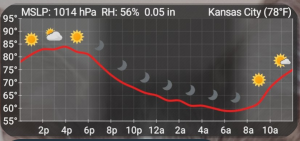
AF Weather Widget - Nice lil weather widget
5. There are still downsides
- A lot of Open Source products are still jumping on the AI bandwagon, so who knows how the software quality will look in another year or two.
- Linux isn't perfect, the creator of Linux isn't perfect, Firefox isn't perfect.
6. Questions?
Ask me whatever
7. Links 'n' things
- Alternative software lists
- Distributed social media info
- More info about dark patterns and enshittification